

Editor's Choice
The Stablecoin Compliance Trap for Small Businesses
Stablecoins may offer fast, dollar-linked payments, but small businesses still face issuer, redemption, reserve, freeze, and compliance risks.


Stablecoins may offer fast, dollar-linked payments, but small businesses still face issuer, redemption, reserve, freeze, and compliance risks.

Stablecoins can make crypto payments faster and more practical, but merchants still face issuer, reserve, redemption, compliance, liquidity, and operational risks.
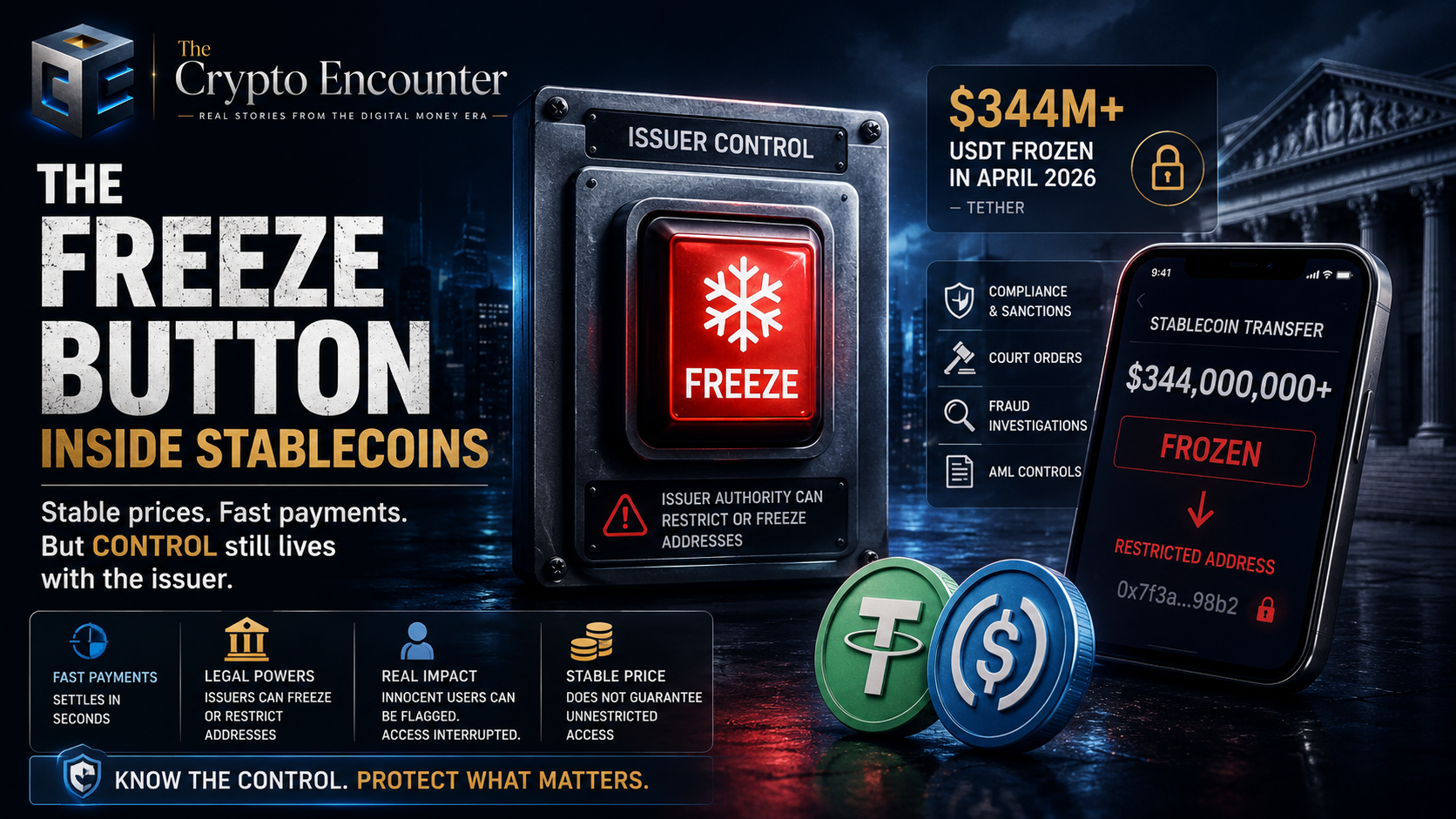
Stablecoins can move quickly, but issuers may retain powers to restrict addresses or freeze tokens. Learn what that control means for payments and remittances.
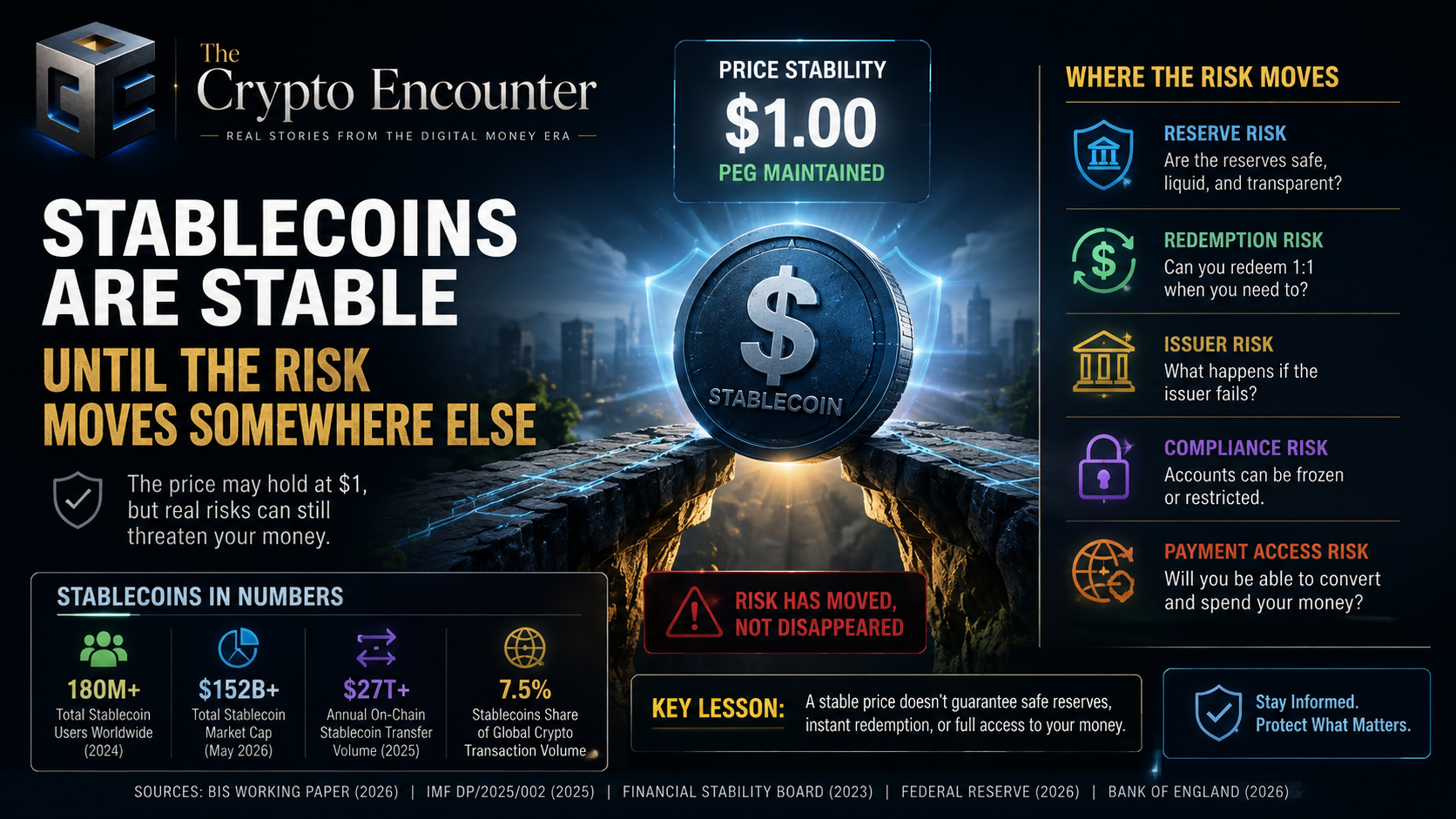
Stablecoins can make digital dollars easier to transfer, but their stability depends on reserves, redemption, issuers, compliance, and payment infrastructure.
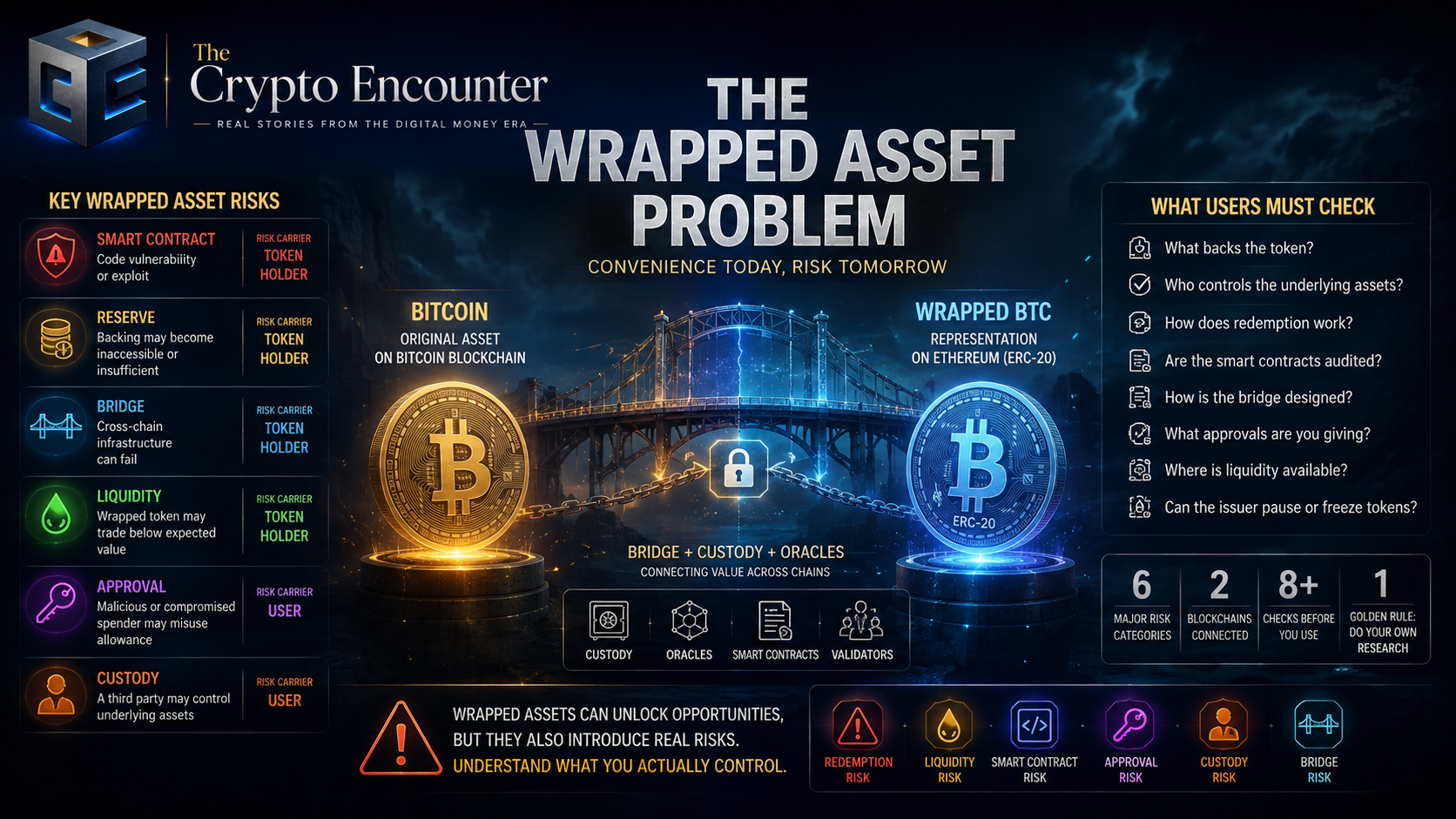
Wrapped tokens expand DeFi utility, but they can introduce bridge, custody, smart-contract, liquidity, and approval risks that users must understand.
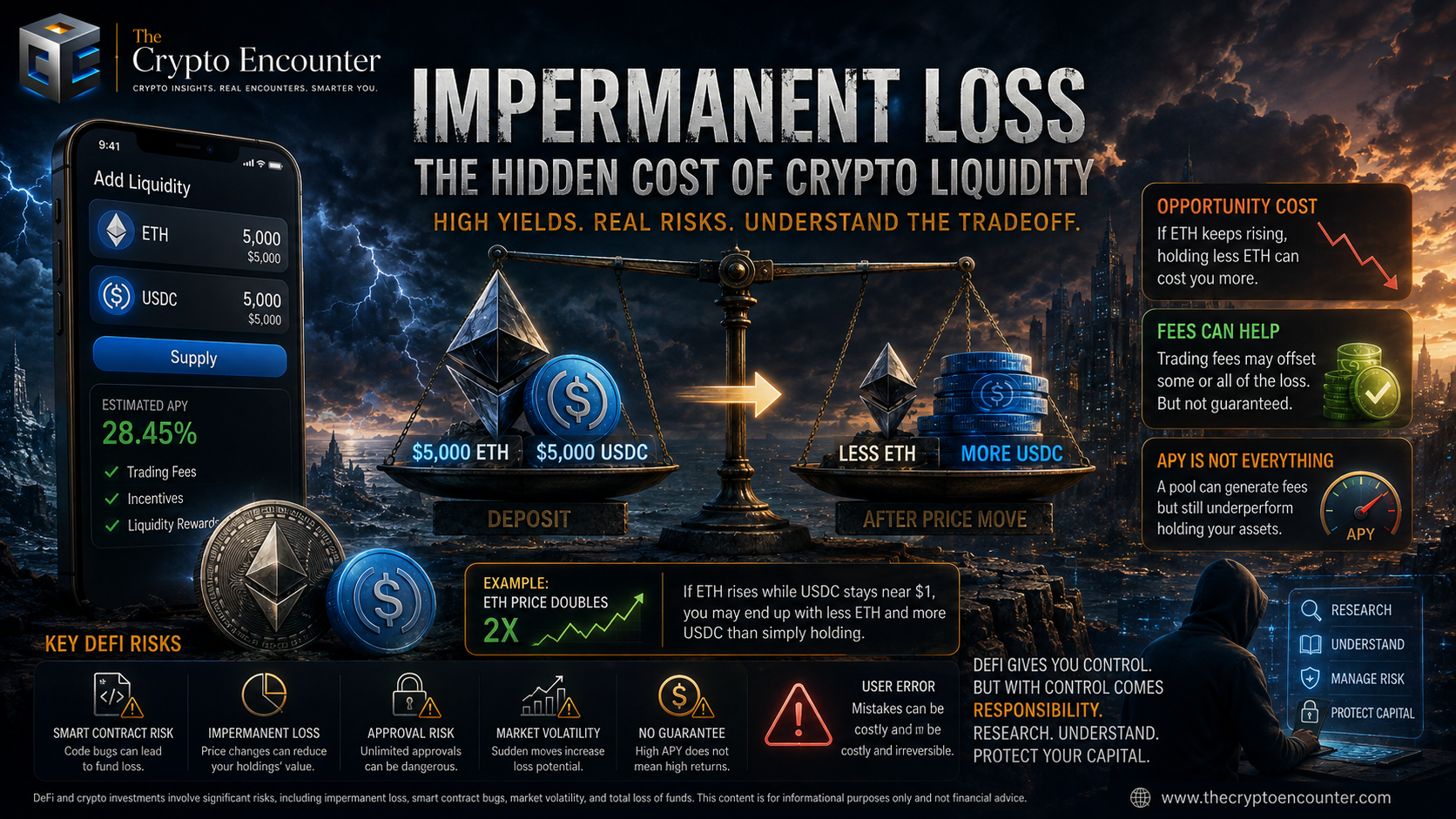
Impermanent loss is not simply a technical DeFi term. It describes how changing token prices can leave liquidity providers with less value than if…
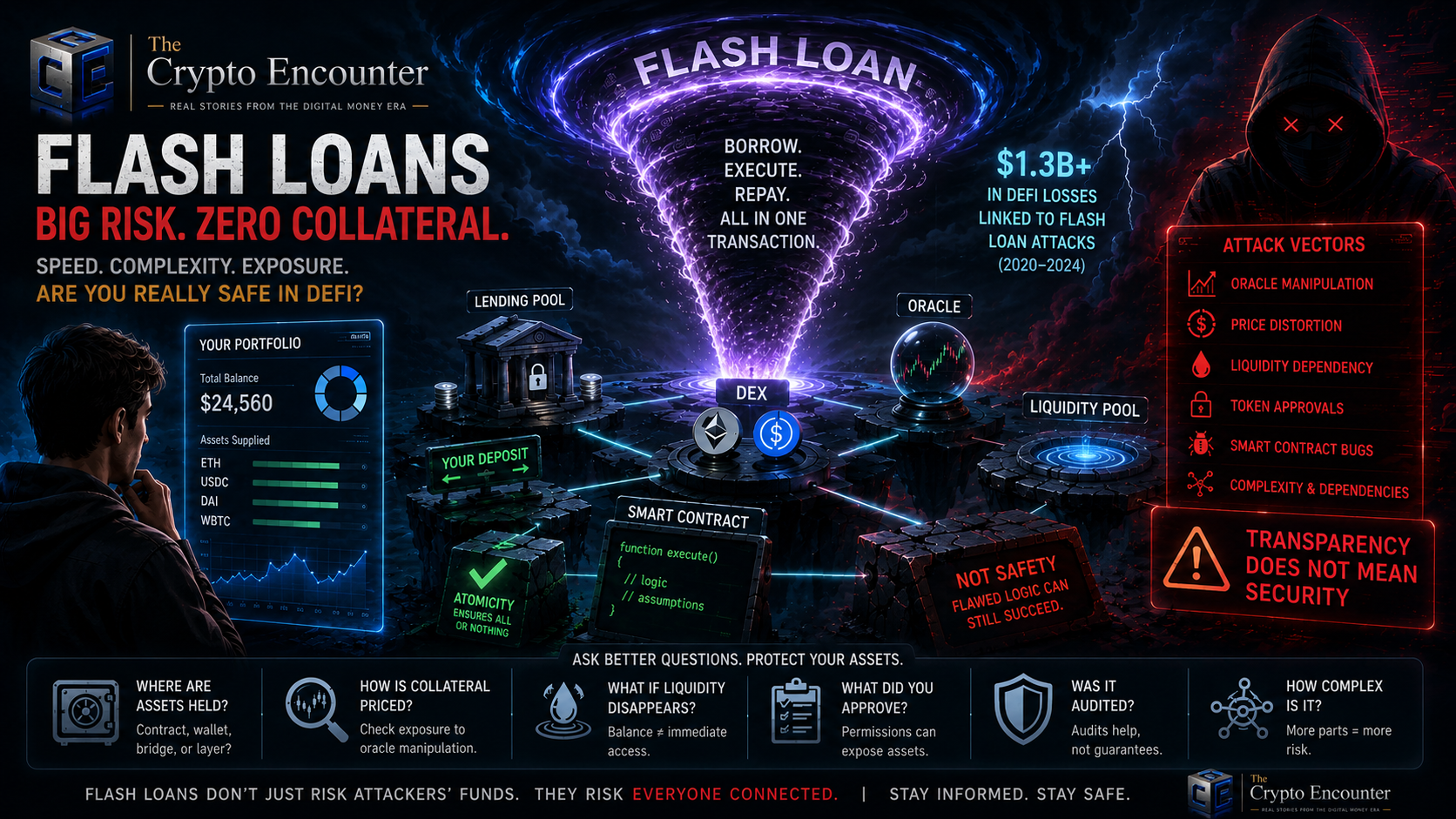
Flash loans can be legitimate DeFi tools, but the same temporary liquidity can magnify smart-contract and oracle weaknesses into serious protocol-level risks.
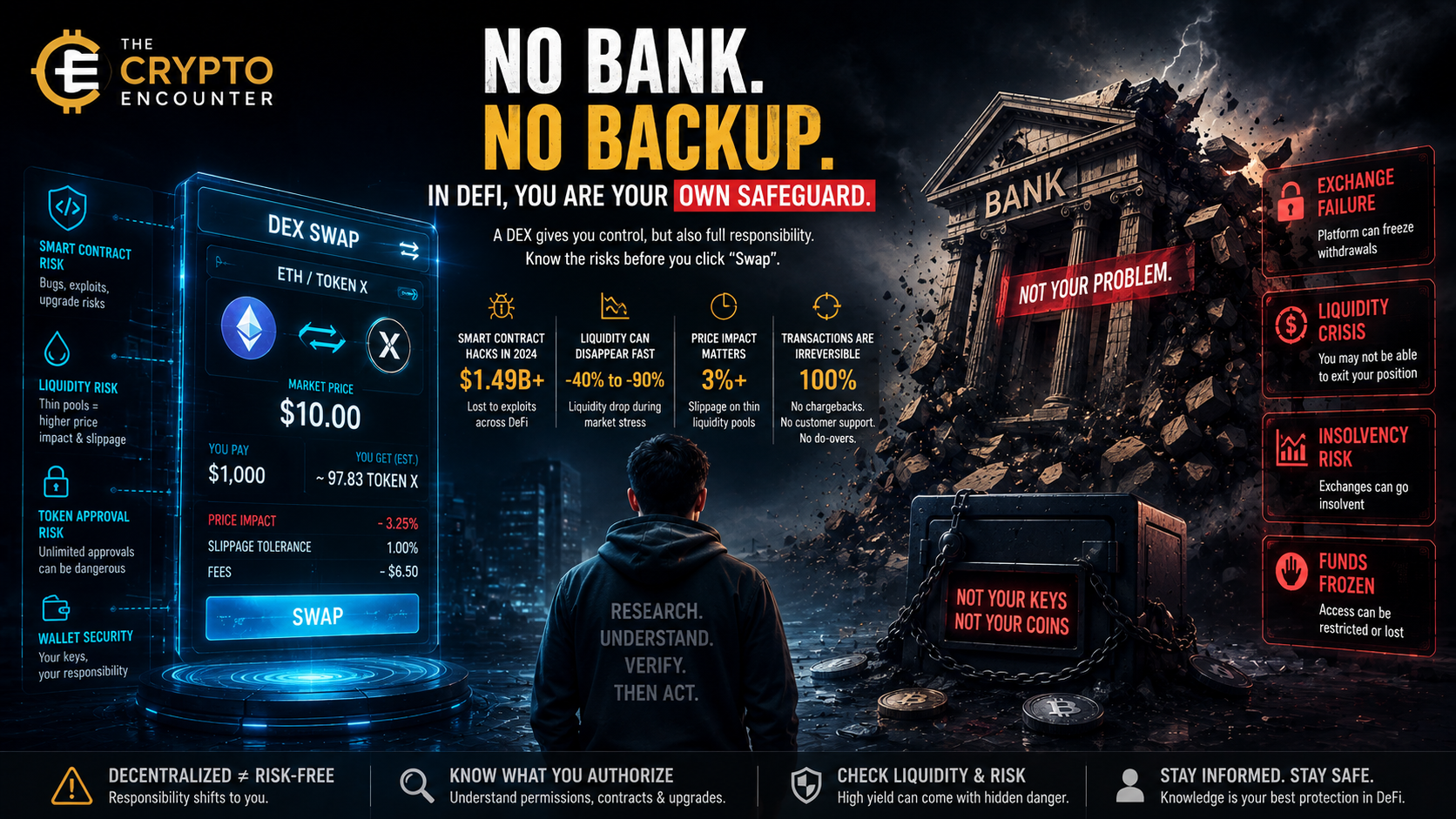
Decentralized exchange risks can extend beyond market losses. Learn how smart contracts, self-custody, token approvals, liquidity, and user responsibility shape the risks of using…

KYC proves an exchange knows who you are, not that your crypto is safe. Custody, solvency, regulation, and platform controls determine fund protection and…