
Editor's Choice
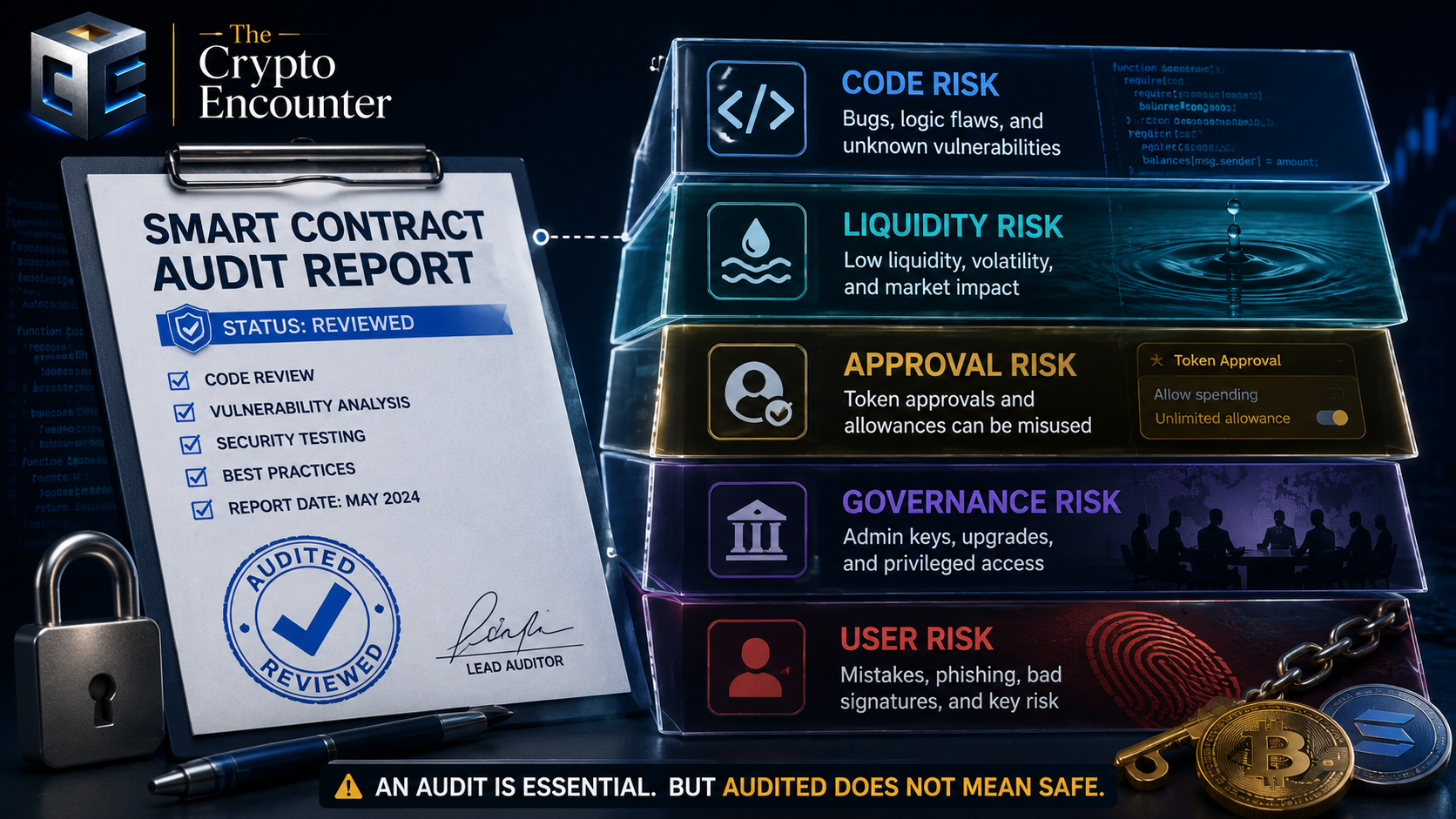
Audited Does Not Mean Safe
A smart contract audit can reduce DeFi risk, but it cannot guarantee safety. This guide explains what audits miss and how smart contract, liquidity, approval, governance,…

Selected reporting, analysis, investigations, and explainers chosen by The Crypto Encounter’s editorial team for their significance, originality, depth, or value to readers.
A smart contract audit can reduce DeFi risk, but it cannot guarantee safety. This guide explains what audits miss and how smart contract, liquidity, approval, governance,…
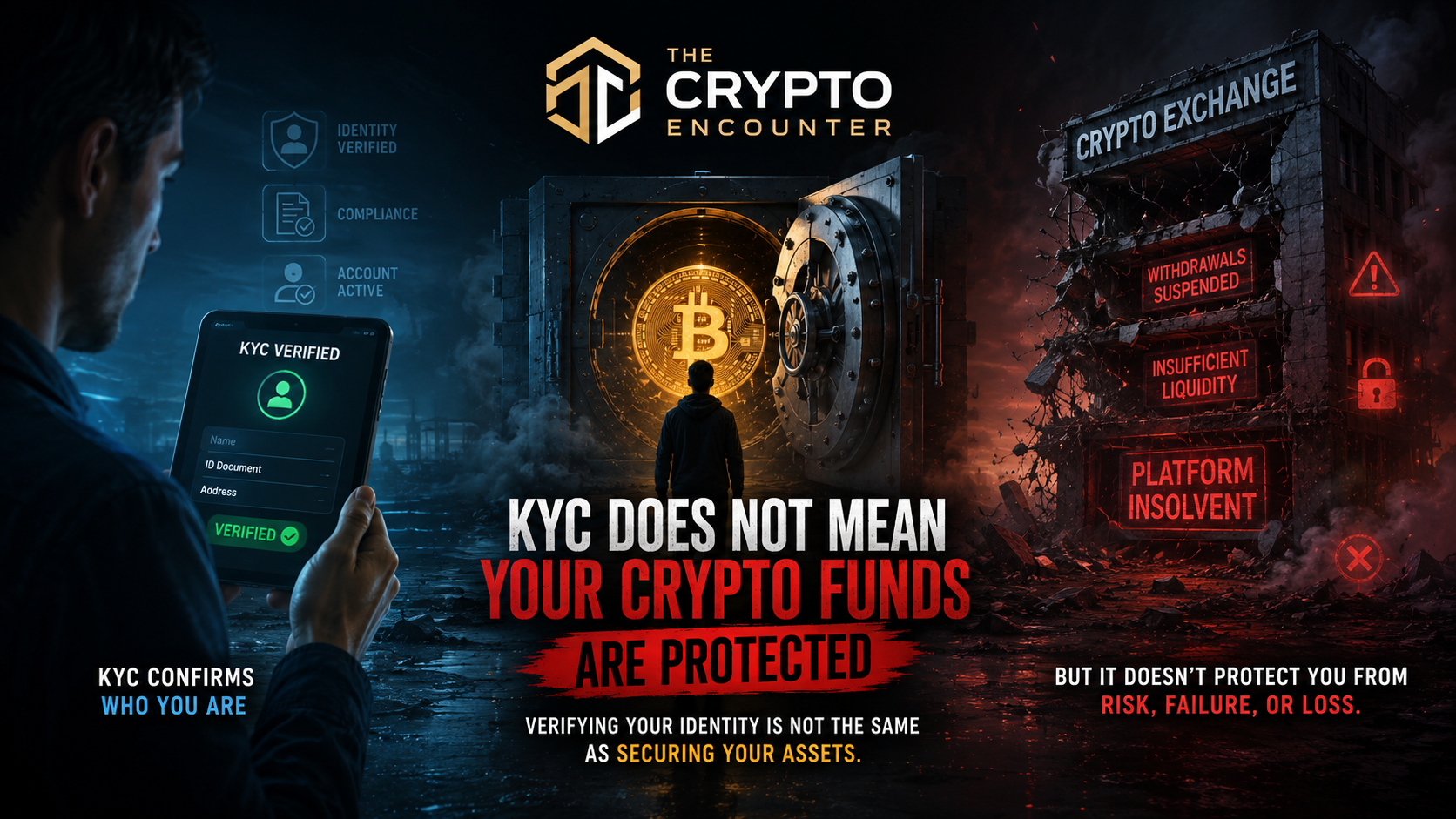
KYC proves an exchange knows who you are, not that your crypto is safe. Custody, solvency, regulation, and platform controls determine fund protection and risk.

An exchange balance can feel like direct ownership, but access still depends on custody, solvency, regulation, and platform controls. Here is how exchange trust works, where…
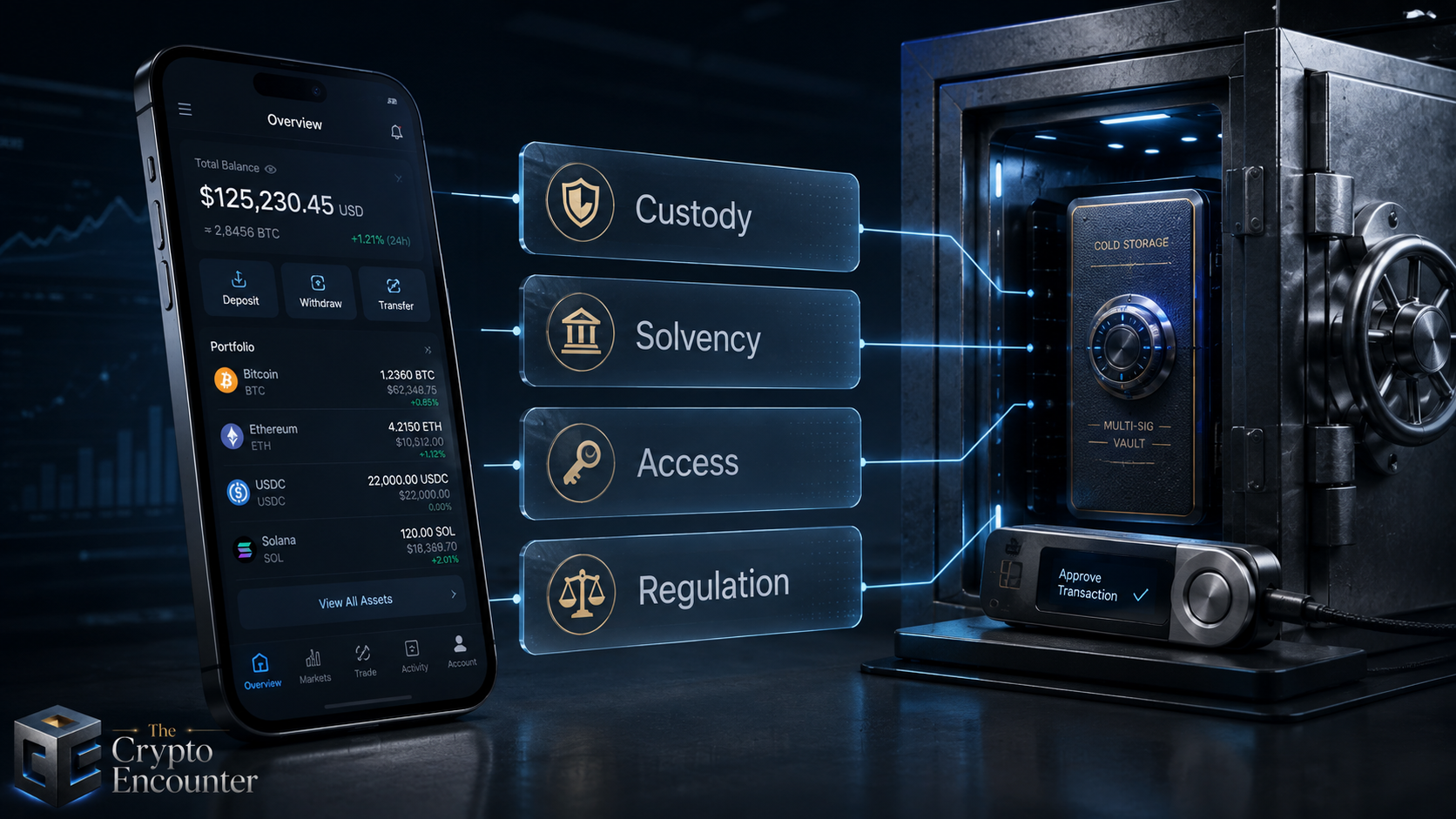
Exchange balances can look like direct ownership, but access depends on custody, private keys, solvency, liquidity, regulation, and platform controls. This guide explains the exchange token…
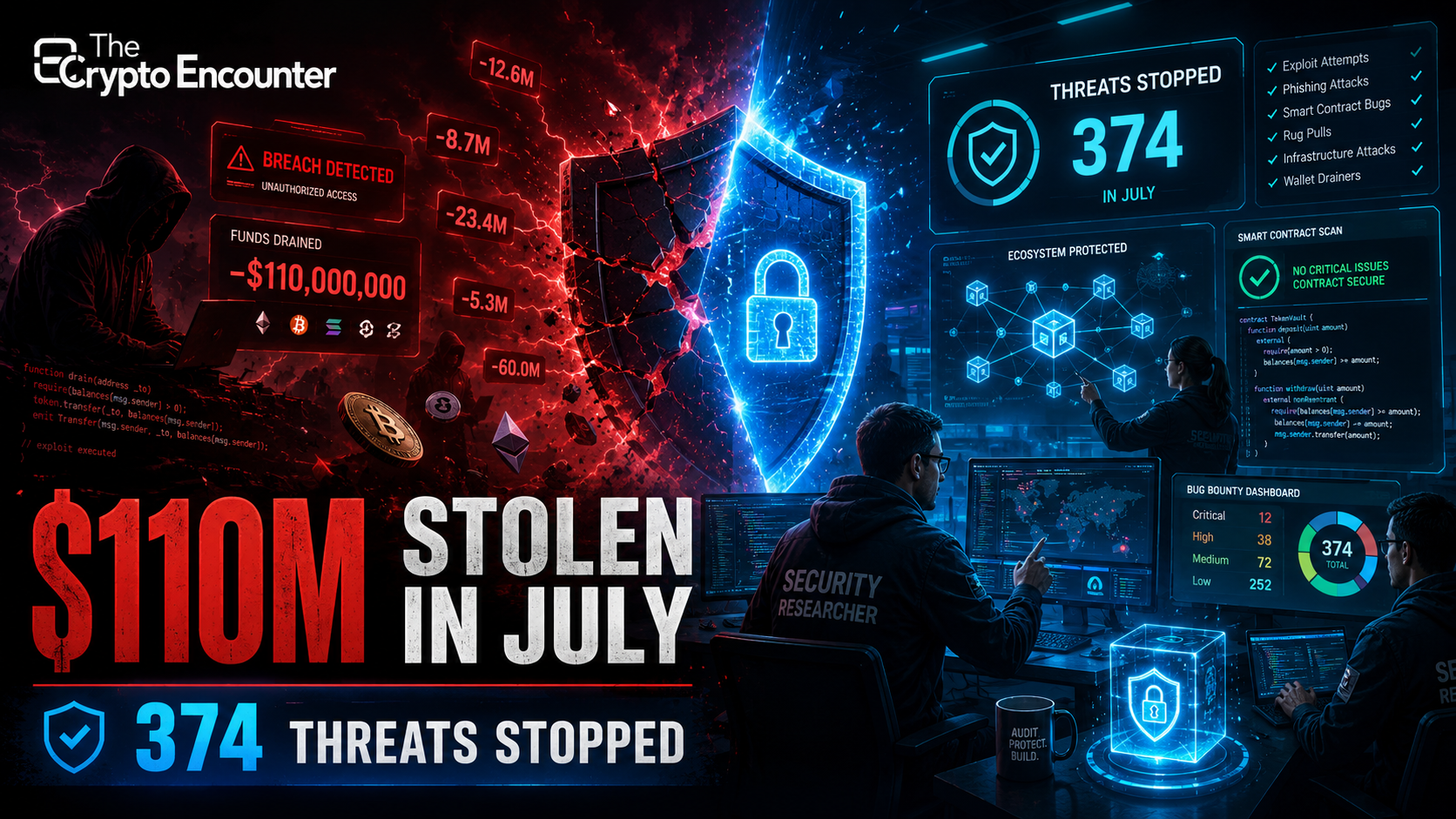
Crypto attackers stole roughly $110 million in July 2026, while Immunefi researchers prevented 374 threats and received more than $2.32 million through bug bounties and audit…
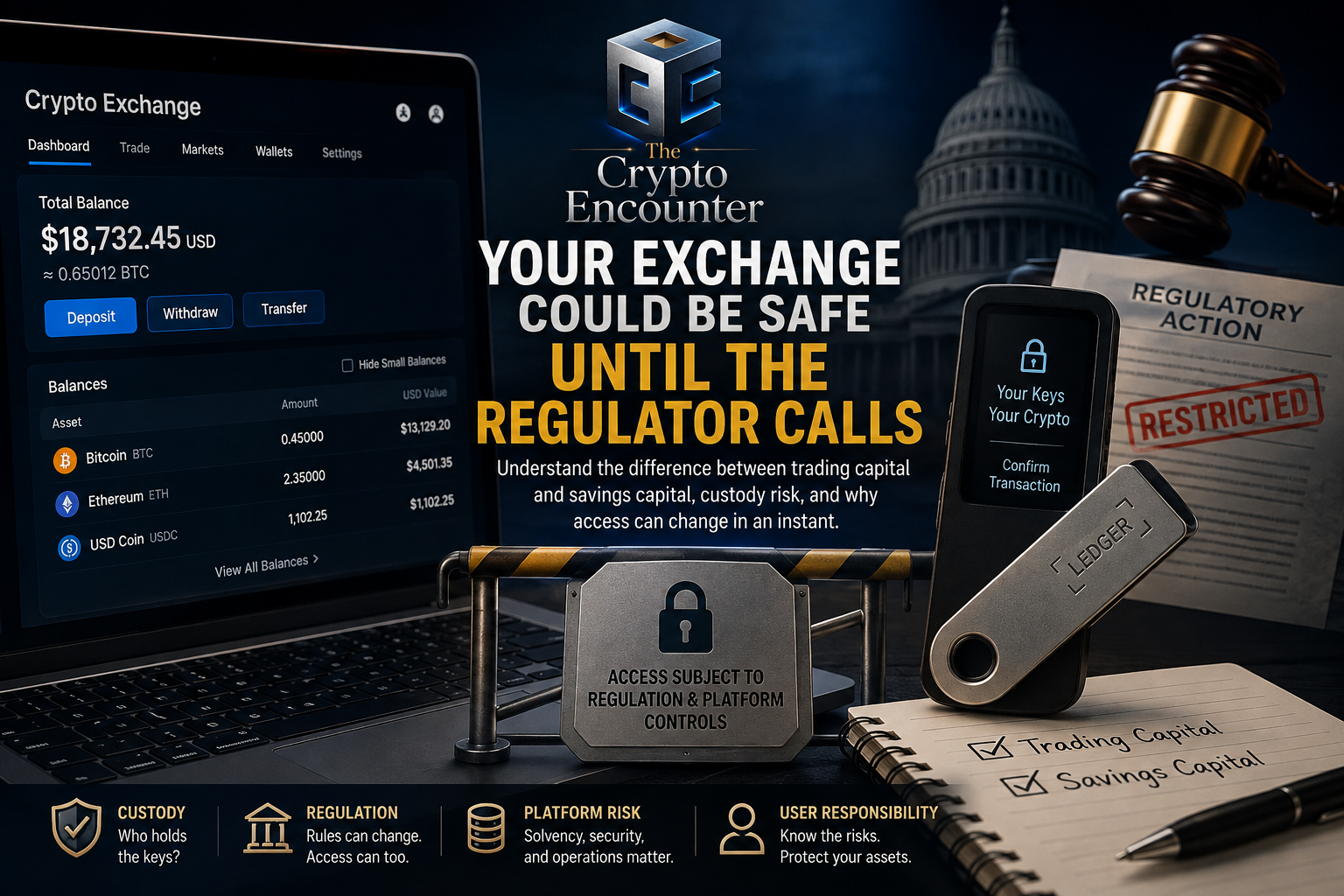
A crypto exchange balance may look like ownership, but access still depends on custody, solvency, regulation, and platform controls. Here is why trading capital and savings…
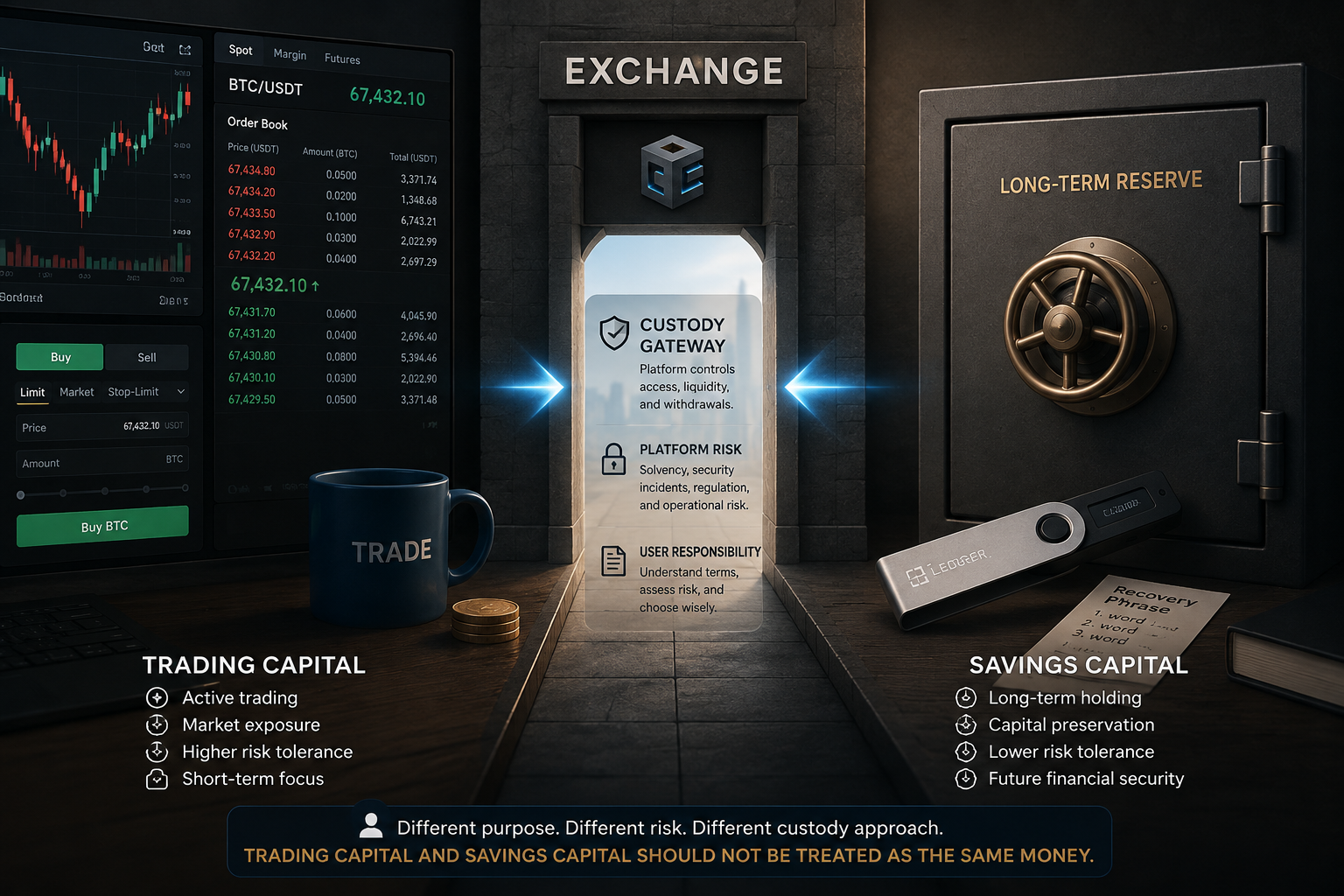
Trading capital and savings capital may appear identical inside a crypto exchange account, but they serve very different financial purposes. This guide explains how custody, solvency,…

The Short Answer A bank is built around a specific legal bargain: it takes deposits, and in exchange for that privilege, it accepts capital requirements, federal…
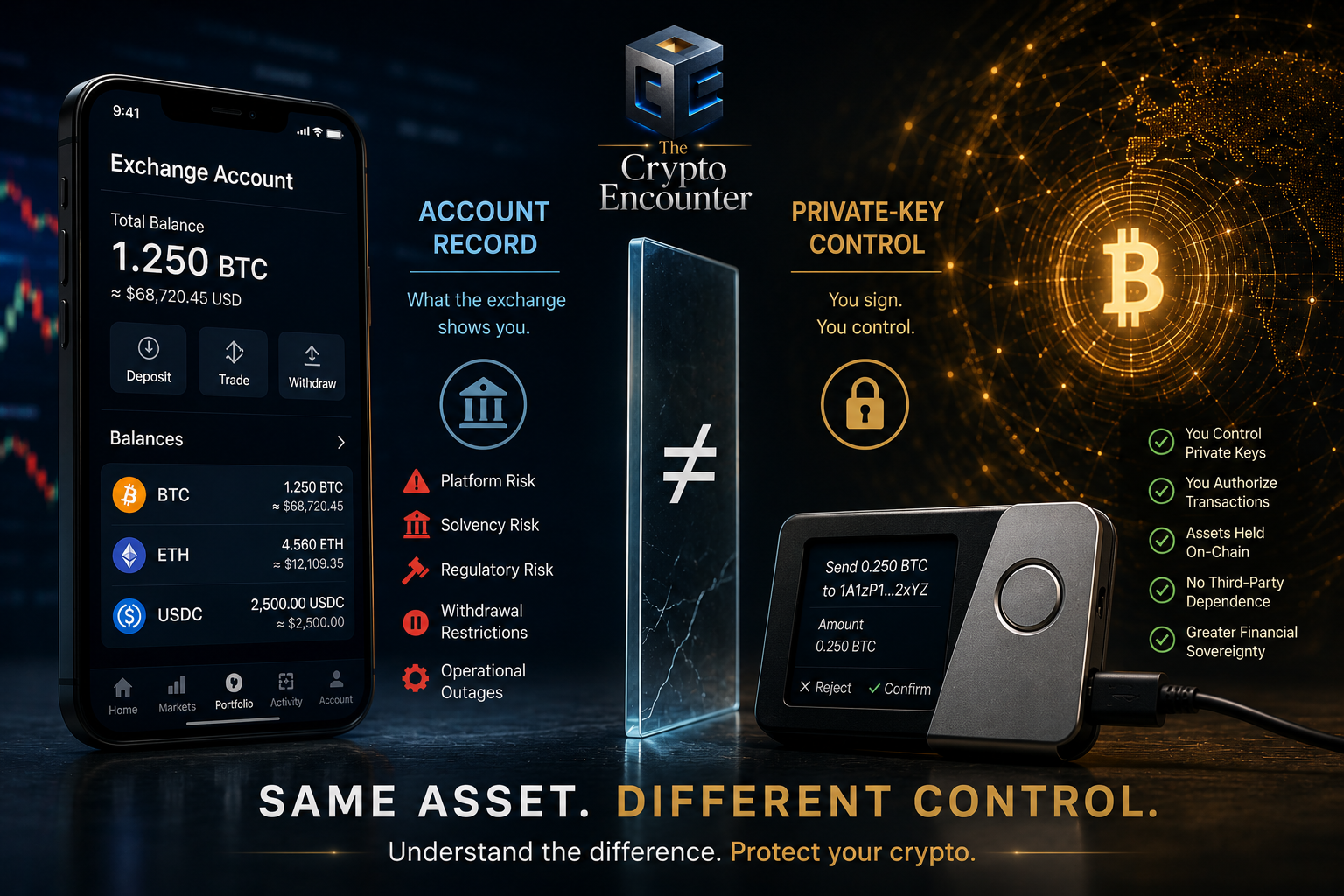
An exchange app may show that you own crypto, yet access depends on private-key custody, platform solvency, withdrawal systems, regulation, and account controls. This guide explains…

The unhackable blockchain may protect a network’s transaction history, but users remain exposed through wallets, devices, phishing links, smart contracts, exchanges, and human error.