The Difference Between Trading Capital and Savings Capital
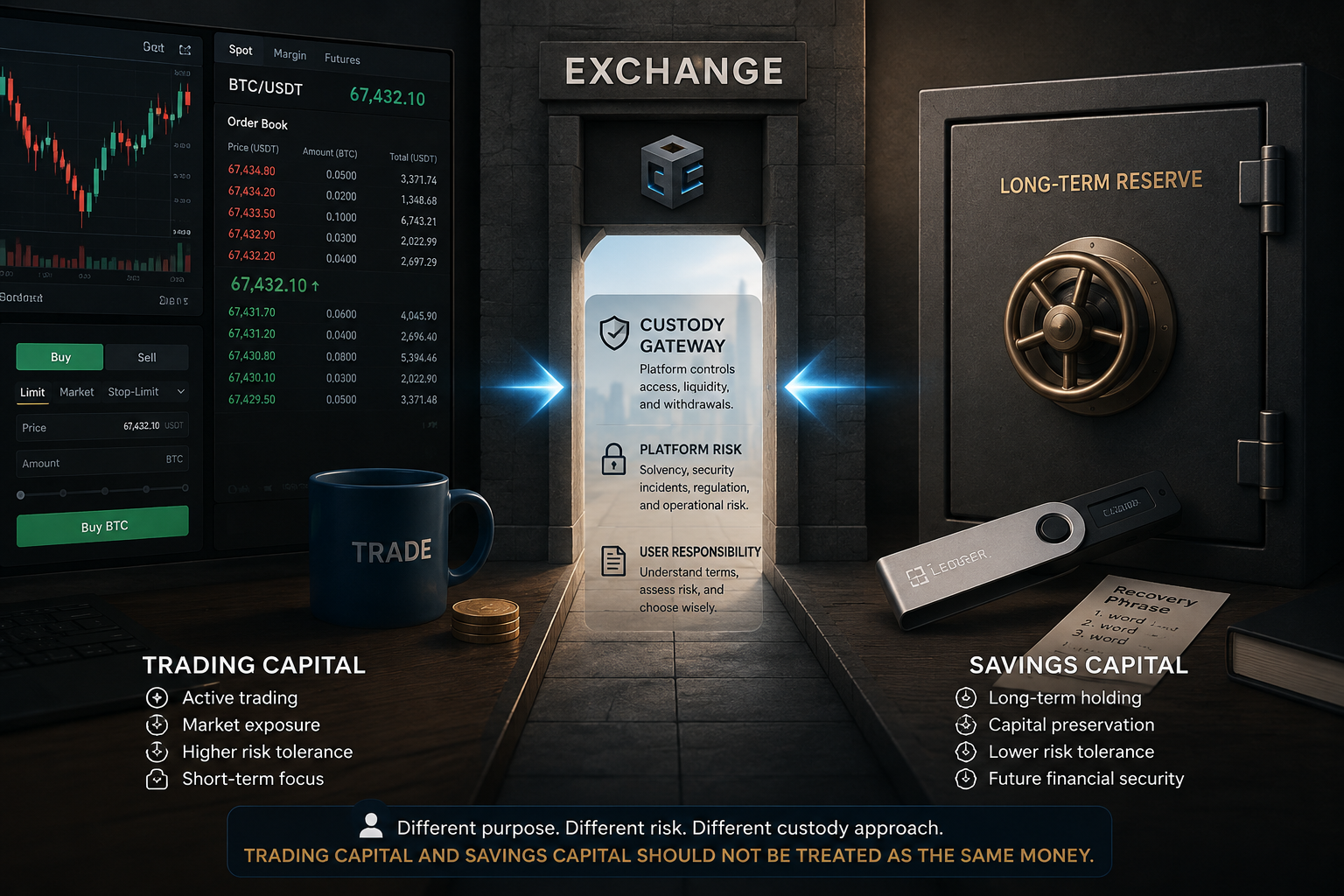
Trading capital and savings capital may appear identical inside a crypto exchange account, but they serve very different financial purposes. This guide explains how custody, solvency,…

Selected reporting, analysis, investigations, and explainers chosen by The Crypto Encounter’s editorial team for their significance, originality, depth, or value to readers.
Trading capital and savings capital may appear identical inside a crypto exchange account, but they serve very different financial purposes. This guide explains how custody, solvency,…

The Short Answer A bank is built around a specific legal bargain: it takes deposits, and in exchange for that privilege, it accepts capital requirements, federal…
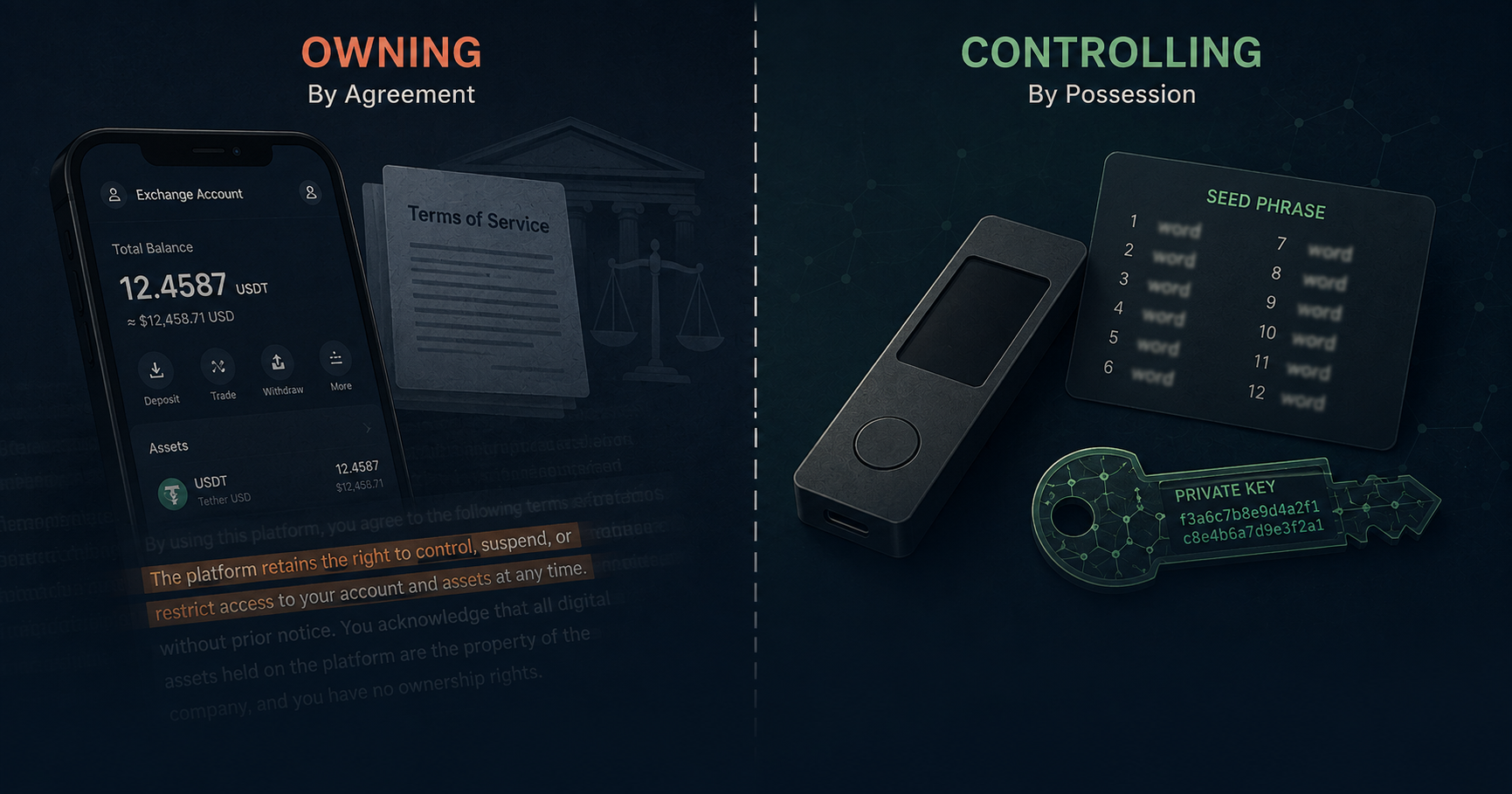
An exchange app may show that you own crypto, yet access depends on private-key custody, platform solvency, withdrawal systems, regulation, and account controls. This guide explains…
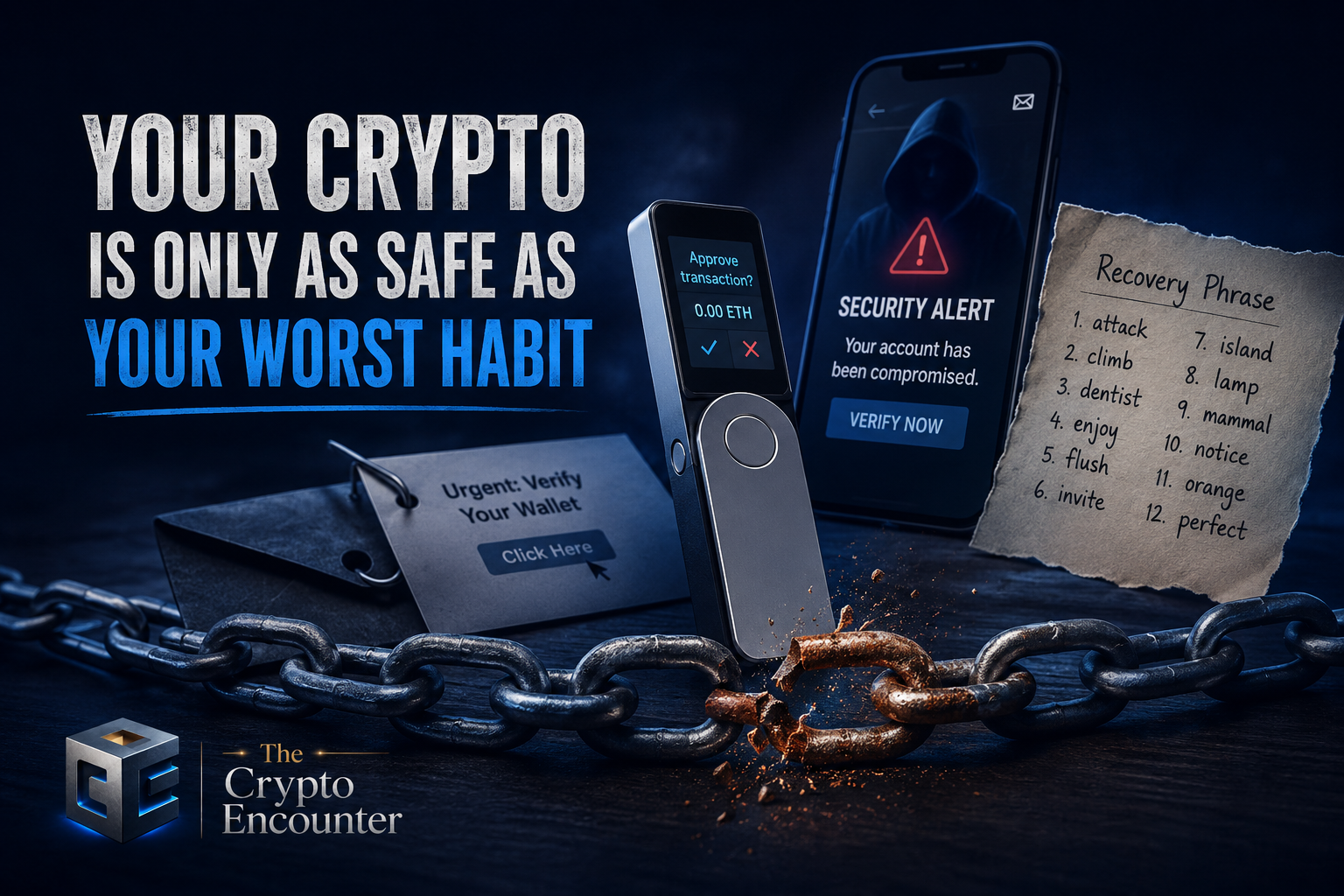
The unhackable blockchain may protect a network’s transaction history, but users remain exposed through wallets, devices, phishing links, smart contracts, exchanges, and human error.
The Short Answer Owning crypto means you have a claim to it. Controlling crypto means you can actually move it without asking anyone’s permission. Those sound…
Why crypto beginners lose money is not simply a question of choosing the wrong token. Wallet permissions, exposed recovery phrases, fake platforms, phishing links, compromised devices,…
Blockchain networks can be technically secure while their users remain exposed. This guide explains how everyday habits weaken crypto safety and provides practical steps for protecting…
A blockchain records what happened with near-total accuracy. It cannot record whether what happened was right. Consensus, the process by which thousands of computers agree on…
Crypto transactions usually cannot be reversed. Learn why crypto has no undo button, how scams happen, and the simple habits that can keep your assets safe.
Secure blockchains cannot protect users from every fake website, stolen recovery phrase, deceptive approval, or impersonation scam. This guide explains the technical and human gap that…