

Crypto Security vs Safety: Why Being Secure Isn’t the Same as Being Safe
Crypto security vs safety is not the same question, even though most people treat them as one. Bitcoin’s blockchain has never been hacked at…

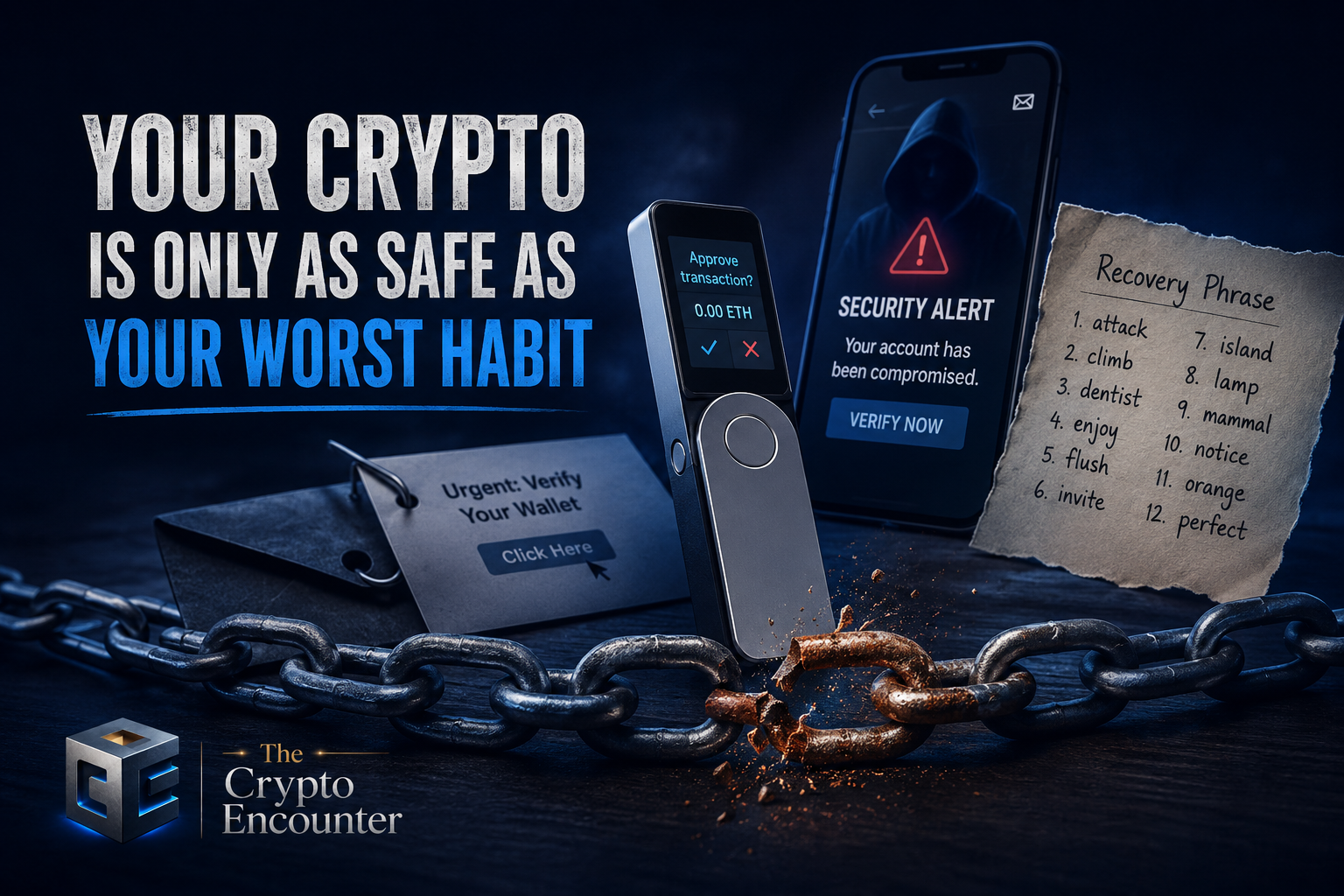
The unhackable blockchain may protect a network’s transaction history, but users remain exposed through wallets, devices, phishing links, smart contracts, exchanges, and human error.
Blockchain networks can be technically secure while their users remain exposed. This guide explains how everyday habits weaken crypto safety and provides practical steps…
A blockchain records what happened with near-total accuracy. It cannot record whether what happened was right. Consensus, the process by which thousands of computers…
Crypto transactions usually cannot be reversed. Learn why crypto has no undo button, how scams happen, and the simple habits that can keep your…
Secure blockchains cannot protect users from every fake website, stolen recovery phrase, deceptive approval, or impersonation scam. This guide explains the technical and human…
Bitcoin’s cryptography is rarely the easiest target. Criminals steal crypto by manipulating people, compromising devices, impersonating support agents, and turning ordinary decisions into irreversible…
Crypto networks can be technically secure while users remain vulnerable through passwords, wallets, phishing links, devices, recovery phrases, and social engineering. Understanding that gap…
Crypto can be secure at the blockchain level while users lose money through fake investments, malicious approvals, compromised devices, stolen keys, and irreversible mistakes.…
Crypto protocols can use powerful cryptography while users remain vulnerable to phishing, malicious wallet approvals, stolen recovery phrases and social engineering. Here is what…